
IEC 60745 - For Handheld tools
IEC 60745 is an international standard that specifies safety requirements for hand-held motor-operated electric tools. The primary focus of this standard is to ensure that these tools are designed and manufactured to minimize the risk of injury to users. The standard is crucial for manufacturers, importers, and distributors of electric tools, as compliance ensures the safety and reliability of the products in global markets.
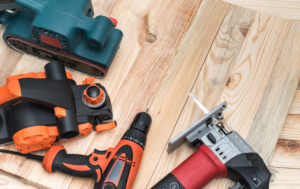
Key Safety Aspects of IEC 60745 for Handheld Tools
The requirements for IEC 60745 cover a broad range of safety aspects, including mechanical, electrical, and thermal protection. Tools must be constructed to prevent accidental contact with moving parts, incorporate protective guards, and withstand mechanical stress during normal use. Electrical safety is paramount, with the standard mandating double or reinforced insulation to protect users from electric shock, along with proper grounding methods where applicable. Tools must also be designed to avoid overheating, with adequate ventilation to dissipate heat, and the materials used must resist degradation at high temperatures. Additionally, the standard sets permissible limits for noise and vibration levels to safeguard users’ long-term health.
Clear safety markings, including the manufacturer’s details, and comprehensive user instructions are also required to ensure safe operation, maintenance, and emergency procedures are well under.
Other Safety Standards
Click Here to know more
Click Here to know more
Click Here to know more
Click Here to know more
Click Here to know more
Click Here to know more
Click Here to know more
Click Here to know more
Category | Examples of Appliances | Relevant Standards |
Drills | Corded and Cordless Drills | AS / NZS IEC 60745-1 AS/NZS IEC 60745-2-1 |
Screwdrivers and Wrenches | Corded and Cordless Screwdrivers | AS / NZS IEC 60745-1, AS/NZS IEC 60745-2-2 |
Grinders | Angle Grinders, Disc Grinders | AS/NZS IEC 60745-2-3 |
Saws | Circular Saws, Jig Saws | AS/NZS IEC 60745-2-5 |
Sanders | Belt Sanders, Orbital Sanders | AS/NZS IEC 60745-2-4 |
Hammers | Rotary Hammers, Demolition Hammers | AS/NZS IEC 60745-2-6 |
Planers | Electric Planers | AS/NZS IEC 60745-2-14 |
Company Strengths at a glance
Why C-PRAV?
Partnering with C-PRAV for IEC 60745 compliance ensures that your hand-held motor-operated electric tools meet the highest safety standards. Our specialized team, with a deep understanding of IEC 60745 requirements, delivers efficient, tailored solutions that streamline the certification process, helping you achieve compliance quickly and cost-effectively. Leveraging our global network and strategic partnerships, we facilitate international approvals, ensuring your tools meet regulatory requirements across multiple markets.
For more information about IEC 60745
Quick FAQ'S
The standard covers a wide range of hand-held electric tools, including drills, grinders, saws, sanders, hammers, planers, screwdrivers, routers, and more.
Yes, in Australia and New Zealand, the standard is adopted with some deviations, known as AS/NZS 60745, which may include additional testing and marking requirements.
The standard requires tools to undergo rigorous testing for mechanical, electrical, and thermal safety, as well as noise and vibration levels, to ensure they are safe for use.
Tools must have protective guards, double or reinforced insulation, adequate ventilation, and clear safety markings. They should also meet specific noise and vibration limits.
Manufacturers need to design and test their tools according to the specifications of IEC 60745, ensuring they meet all the required safety criteria before certification.
More detailed information about IEC 60745 can be found through the International Electrotechnical Commission (IEC) or by consulting the standard through accredited certification bodies and regulatory authorities.
Related Resources
Malaysia: MTSFB Opens Public Consultation on Revised 5G Technical Codes and New IoT Code
The Malaysian Technical Standards Forum Bhd (MTSFB) has opened public consultation on four draft Technical Codes that will shape how telecom equipment is certified in Malaysia. Three are first revisions of the existing IMT-2020 (5G) codes for base stations, cellular boosters, and user equipment, which feed directly into type approval. The fourth is a new code setting IoT data interoperability requirements. The comment windows are short: feedback on the
Lebanon’s TRA Clarifies Type Approval Procedure for Telecom Equipment
Lebanon’s Telecommunications Regulatory Authority (TRA) has issued a clarification that simplifies how telecom-enabled equipment is certified for the Lebanese market. In Notification TRA/PRE/327-020926, dated 2 September 2026 (“Clarification of Type Approval Procedure for Telecom-Enabled Equipment”), the TRA confirmed that type approval applications are filed in the manufacturer’s name and that the resulting certificate can be relied upon by all importers of the same approved product. For manufacturers and importers,
Hong Kong’s OFCA Updates Specifications for ISM and E-UTRA Base Station Equipment
Hong Kong’s Office of the Communications Authority (OFCA) has published updated technical specifications for several categories of radio equipment. On 31 August 2026, OFCA issued new editions of three HKCA specifications, prescribed under the Telecommunications Ordinance (Cap. 106), covering industrial, scientific and medical (ISM) equipment and 4G LTE base station equipment. These specifications set out the technical and evaluation requirements that equipment must meet to be certified under Hong